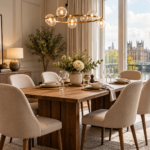
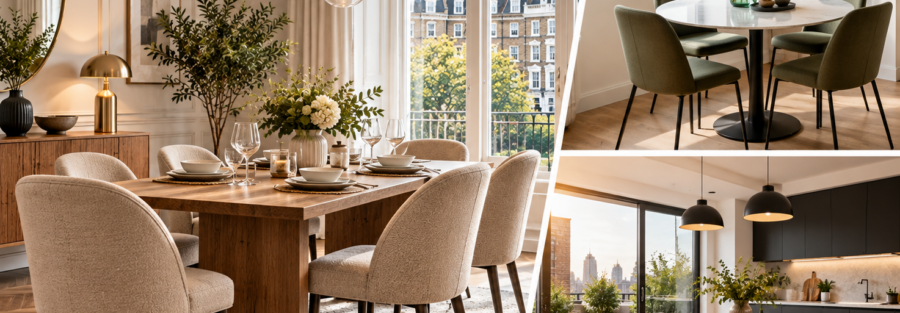
Choosing dining furniture is not just about finding a table and chairs that look good together. The size of your home, the layout of the room and the way you use the space all influence which furniture will work best. From compact London flats to spacious family homes, the right combination can make dining areas more comfortable, functional and visually appealing.
If you are looking for dining furniture in London, start by considering your available space, everyday requirements and interior style. A little planning can help you choose furniture that fits naturally into your home.
Dining Furniture for Small London Flats
Space can be limited in many London flats, particularly where the dining area shares space with the kitchen or living room. In these settings, choosing furniture that fits the room without obstructing movement is essential.
Start by measuring the available floor area and identifying the space needed to pull chairs out comfortably. A compact rectangular table may work well against a wall, while a round table can be useful in certain layouts where you want to avoid sharp corners.
Avoid choosing a table based only on its seating capacity. Consider how much room people need to sit down, move around and access nearby doors or kitchen units.
When exploring dining furniture in London, look for pieces that suit the dimensions of your home rather than simply choosing the largest table that fits.
Choosing Furniture for Open-Plan Living Areas
Open-plan homes combine spaces such as the kitchen, dining area and living room. The challenge is to create a clear dining zone without making the overall layout feel divided or crowded.
A dining table can help establish this zone. Positioning it near the kitchen may make serving meals more convenient, while leaving enough room between the dining and living areas helps maintain easy movement.
Furniture finishes can also help create visual continuity. For example, a table with a finish that complements the kitchen cabinetry or living room furniture can make the space feel more coordinated.
You can explore the THS Furniture dining room collection to compare dining tables, chairs and other pieces for your preferred layout.
Selecting Dining Furniture for Family Homes
Family dining areas often need to accommodate everyday meals, homework, celebrations and visitors. In these homes, practicality and seating capacity should guide the furniture selection.
A larger rectangular dining table may suit a dedicated dining room, particularly when several people regularly eat together. Before purchasing, measure the room and allow sufficient clearance around the table.
Dining chairs should be comfortable and proportionate to the table. Check the seat height, width and back support, and make sure the chairs can be pulled out without hitting walls or other furniture.
Material selection also matters. Households with children may prefer finishes that are straightforward to clean and maintain. Check the manufacturer’s care guidance to understand how to look after the surfaces.
Making the Most of Narrow Dining Rooms
Some homes have long, narrow dining spaces where furniture placement requires extra attention. A rectangular table can follow the shape of the room, helping maintain a practical layout.
Keep the main walking route clear and avoid placing large storage units where they restrict access. If you want additional storage, consider the depth of a sideboard or display cabinet before deciding where it should go.
Chair dimensions are particularly important in narrow rooms. Bulky chairs may reduce the available circulation space, even when the table itself fits comfortably.
For homeowners comparing dining furniture in London, drawing a simple floor plan with measurements can help identify the best arrangement before making a purchase.
Choosing Furniture for Larger Dining Rooms
A spacious dining room offers more flexibility, but filling it with too much furniture can make the layout feel cluttered. The aim should be to create a balanced arrangement that suits how you intend to use the room.
A larger table can become the main focal point, while a sideboard provides storage for tableware and serving accessories. A display cabinet can also introduce visual interest, provided there is enough room for doors to open and people to move around comfortably.
Consider the relationship between furniture and lighting. A pendant light positioned appropriately above the dining table can help define the area, while coordinated finishes can connect the different pieces.
Choose furniture according to your actual needs rather than adding pieces simply because the room has space available.
Match Furniture Materials and Colours to Your Interior
The right furniture should complement the rest of your home. Wooden finishes can create a warm, traditional atmosphere, while contemporary designs may suit interiors with clean lines and simpler colour palettes.
Dining chairs do not always need to match the table exactly. Contrasting materials or upholstery can introduce texture and personality, provided the overall combination feels balanced.
Consider your flooring, wall colours, lighting and existing furniture before deciding on a finish. If possible, compare product details and samples against your current décor.
Measure Before You Buy
Regardless of the size of your home, accurate measurements are essential. Measure the room, the proposed furniture dimensions and the available clearance around doors, walkways and other pieces.
It is also worth checking the dimensions of entrances, staircases and lifts if the furniture needs to be delivered to a flat or upper-floor property. Confirm delivery arrangements with the retailer before ordering larger items.
THS Furniture offers a range of dining room furniture, including tables, chairs, benches and storage pieces. You can browse the dining room furniture collection to explore the available options.
Find Dining Furniture That Fits Your London Home
The best dining furniture depends on your home’s layout, the number of people using the space and the way you live. Compact flats may benefit from carefully sized pieces, while larger dining rooms can accommodate more generous arrangements and additional storage.
If you are searching for dining furniture in London, take measurements, prioritise comfort and compare designs that suit your interior. With the right planning, you can create a dining area that looks cohesive and works well for everyday life.